Digital Marketing vs Traditional Marketing: What You Need to Know
Marketing plays an important role in the success of every business. It helps companies promote their products and services, reach potential customers, and build strong brand awareness. Over the years, marketing has changed significantly with the growth of technology and the internet.
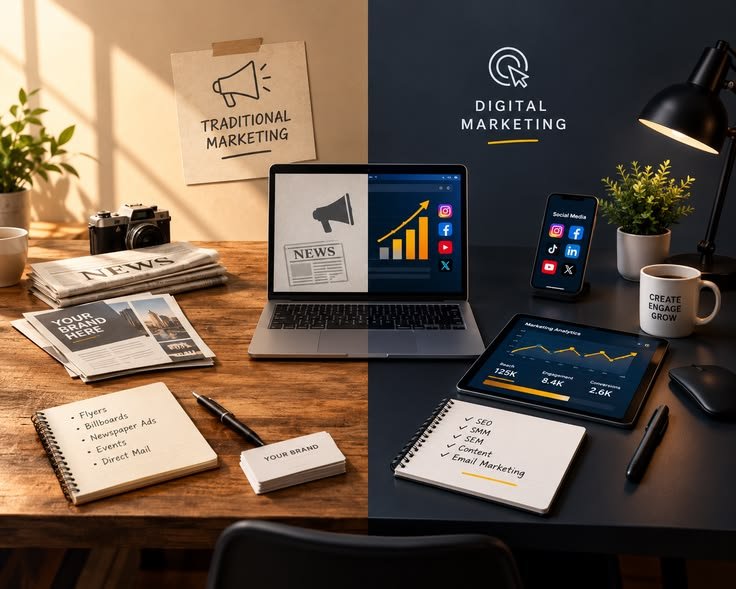
Today, businesses use two major types of marketing: digital marketing and traditional marketing. Traditional marketing includes methods such as newspaper advertisements, television commercials, radio, banners, and brochures. On the other hand, digital marketing uses online platforms such as social media, websites, search engines, and email to connect with customers.
Both marketing methods have their own advantages and limitations. While traditional marketing helps businesses reach local audiences, digital marketing offers better online reach, audience targeting, and performance tracking.
For businesses looking to strengthen their online presence, choosing the Best Digital Marketer in Malappuram can help develop effective marketing strategies, improve brand visibility, and reach the right audience. Understanding the differences between digital and traditional marketing can help businesses make better promotional decisions.
What Is Digital Marketing?
Digital marketing is the process of promoting products, services, and brands through online platforms and digital technologies. It uses channels such as social media, websites, search engines, and email to reach potential customers. It helps businesses connect with their target audience and build a strong online presence. Through digital marketing, businesses can increase brand awareness, attract new customers, and generate more sales. It also allows companies to understand customer interests and measure their marketing performance. In today’s digital world, it has become an important part of business growth and success.
Some common examples of digital marketing include:
Social Media Marketing:
Promoting products and services through social media platforms like Instagram, Facebook, and LinkedIn to connect with customers and increase brand awareness.
Search Engine Optimization (SEO):
Improving a website’s visibility on search engines like Google so that it appears higher in search results and attracts more visitors.
Content Marketing:
Creating and sharing valuable content, such as blogs, videos, and social media posts, to attract and engage potential customers.
Email Marketing:
Sending promotional emails, newsletters, and updates to customers to build relationships and encourage purchases.
Pay-Per-Click Advertising (PPC):
A paid advertising method where businesses pay whenever someone clicks on their online advertisement, such as Google Ads.
Website Marketing:
Using a business website to showcase products or services, share information, attract visitors, and generate sales.
What Is Traditional Marketing?
Traditional marketing refers to promoting products, services, or brands through offline methods such as newspapers, television, radio, magazines, billboards, and brochures. It helps businesses reach potential customers through traditional advertising channels without relying on the internet. Unlike digital marketing, which uses online platforms, traditional marketing focuses on physical and broadcast media to build brand awareness, attract customers, and promote products.
Examples of Traditional Marketing:
Print Advertising: Promoting products through newspapers, magazines, flyers, and brochures.
Television Advertising: Showing commercials to promote products and services.
Radio Advertising: Reaching audiences through radio advertisements.
Outdoor Advertising: Using billboards, banners, and posters to attract attention.
Direct Mail Marketing: Sending promotional letters, catalogues, and offers directly to customers.
Key Differences Between Digital Marketing and Traditional Marketing
Digital marketing and traditional marketing are two different approaches to promoting products and services. While both aim to attract customers and increase brand awareness, they differ in the platforms they use, their costs, audience reach, and methods of communication. Understanding these differences helps businesses choose the right marketing strategy for their goals.
For businesses looking to improve their online visibility and reach more customers, working with the best digital marketer in Malappuram can help create effective marketing strategies and build a strong digital presence. By understanding both marketing approaches, businesses can make informed decisions and choose the right promotional methods for long-term growth.
1. Marketing Platforms
- Digital Marketing: Uses online platforms such as websites, social media, search engines, and email.
Traditional Marketing: Uses offline platforms such as newspapers, television, radio, and billboards.
2. Audience Reach
Digital Marketing: Helps businesses reach audiences across different locations worldwide.
- Traditional Marketing: Mainly reaches audiences in specific geographical areas.
3. Marketing Cost
- Digital Marketing: Offers flexible advertising options suitable for different budgets.
- Traditional Marketing: Often involves higher costs for television, print, and billboard advertisements.
4. Target Audience
Digital Marketing: Allows businesses to target specific audiences based on their interests, age, location, and behavior.
- Traditional Marketing: Usually targets a broader audience with limited targeting options.
5. Performance Tracking
- Digital Marketing: Provides real-time data to measure website visits, clicks, views, and customer engagement.
- Traditional Marketing: Measuring campaign performance can be more difficult and time-consuming
6. Customer Interaction
Digital Marketing: Encourages two-way communication through comments, messages, emails, and social media interactions.
- Traditional Marketing: Mainly involves one-way communication through advertisements.
7. Flexibility
Digital Marketing: Marketing campaigns can be updated or changed quickly whenever needed.
- Traditional Marketing: Changing printed or broadcast advertisements can require additional time and money.
8. Content Format
Digital Marketing: Uses videos, images, blogs, social media posts, and interactive content.
- Traditional Marketing: Uses newspapers, brochures, posters, banners, and television commercials.
9. Availability
Digital Marketing: Online advertisements and content can be accessed at almost any time through digital devices.
- Traditional Marketing: Depends on publication schedules, broadcasting times, or physical advertisement placement.
10. Customer Engagement
Digital Marketing: Helps businesses build relationships with customers through online communication and engagement.
Traditional Marketing: Builds brand awareness mainly through offline promotional activities.
Advantages of Digital Marketing
Digital marketing offers numerous benefits to businesses by helping them reach a wider audience, promote their products and services, and build strong relationships with customers. With the help of online platforms and digital tools, businesses can improve their visibility, attract potential customers, and grow their brand. Working with the Best Digital Marketer In Malappuram can also help local businesses choose effective online marketing strategies, improve their digital presence, and reach the right audience.
Some of the major advantages of digital marketing include:
1. Wider Audience Reach
One of the biggest advantages of digital marketing is its ability to reach a large audience across different locations. Unlike traditional marketing, which may be limited to a particular area or region, digital marketing allows businesses to connect with people from different cities and countries. Through websites, social media platforms, and search engines, businesses can promote their products and services to a wider group of potential customers. This helps brands increase their visibility and create more opportunities for business growth.
2. Cost-Effective Marketing
Digital marketing is often more affordable than traditional advertising methods such as television commercials, newspaper advertisements, and billboards. Businesses can start promoting their products through social media, email campaigns, and other online platforms with a limited budget. They can also choose how much they want to spend on paid advertisements based on their marketing goals. This makes digital marketing a suitable option for small businesses, startups, and large companies looking to promote their products without spending too much.
3. Better Audience Targeting
Digital marketing allows businesses to reach specific groups of people based on factors such as age, location, interests, gender, and online behavior. This helps companies show their advertisements to people who are more likely to be interested in their products or services. For example, a bakery can promote its cakes and desserts to people in its local area through targeted social media advertisements. By reaching the right audience, businesses can improve their marketing efforts and attract more potential customers.
4. Measurable Results
Another important advantage of digital marketing is that businesses can easily measure the performance of their marketing campaigns. Tools such as Google Analytics and social media insights help track website visits, clicks, engagement, conversions, and other important data. This information allows businesses to understand which marketing strategies are working and which need improvement. By analysing these results, companies can make better decisions and improve their future marketing campaigns.
5. Easy Customer Interaction
Digital marketing makes communication between businesses and customers faster and easier. Through social media platforms, emails, websites, and messaging applications, customers can ask questions, share feedback, and interact directly with brands. Businesses can respond to customer enquiries, address concerns, and understand their needs more effectively. This regular interaction helps build customer relationships, improve customer satisfaction, and develop trust in the brand.
6. Quick Results and Updates
Digital marketing allows businesses to launch promotional campaigns and share information quickly through online platforms. Unlike traditional advertising, which may require printing or broadcasting time, digital advertisements can be published within a short period. Businesses can also edit their advertisements, update website content, change promotional offers, or adjust campaign budgets whenever necessary. This flexibility helps companies respond quickly to customer needs and changing market trends.
7. Builds Brand Awareness
Digital marketing helps businesses make their brands more recognisable through regular online promotion. By sharing informative blogs, attractive images, videos, and engaging social media posts, businesses can introduce their products and services to potential customers. Consistent online activity also helps customers become more familiar with a brand. Over time, this can improve brand recognition, build trust, and create a stronger connection with the target audience.
8. Improves Business Growth
Digital marketing creates several opportunities for businesses to attract new customers, generate leads, increase website traffic, and improve sales. Through strategies such as SEO, social media marketing, content marketing, and paid advertising, businesses can reach potential customers at different stages of their buying journey. It also helps companies understand customer preferences and improve their marketing strategies. As a result, digital marketing can support long-term business growth and help brands stay competitive in the market.
Advantages of Traditional Marketing
Traditional marketing continues to play an important role in business promotion, even with the growing popularity of digital platforms. It helps businesses connect with customers through familiar offline advertising methods such as newspapers, television, radio, and billboards. These methods can be useful for creating brand awareness, reaching local audiences, and building customer trust.
Some of the major advantages of traditional marketing include:
1. Strong Local Reach
Traditional marketing helps businesses connect with people in specific locations or communities. Through newspaper advertisements, banners, posters, and local radio promotions, businesses can easily attract the attention of people in their surrounding areas. This makes it particularly useful for local shops, restaurants, and service providers who want to reach nearby customers.
2. Builds Brand Recognition
Traditional advertising methods such as television commercials, billboards, and newspaper advertisements help businesses become more familiar to the public. When people repeatedly see or hear about a brand through these channels, they are more likely to recognise and remember it. This repeated exposure helps businesses create a strong brand identity.
3. Physical Presence
One major advantage of traditional marketing is that it provides physical promotional materials that customers can see, touch, and keep. Brochures, flyers, business cards, and catalogues allow businesses to share product and service information directly with customers. These materials can also be useful for future reference.
4. Reaches Offline Audiences
Not everyone regularly uses the internet or social media platforms. Traditional marketing helps businesses reach people who prefer newspapers, television, radio, and other offline communication channels. This allows companies to connect with different age groups and audiences who may not be easily reached through digital platforms.
5. Creates a Lasting Impression
Traditional advertisements, especially billboards, posters, and printed materials, can remain visible for extended periods. Unlike some online advertisements that disappear quickly from a screen, physical advertisements can repeatedly catch people’s attention. This helps businesses maintain visibility and create a lasting impression.
6. Builds Customer Trust
Many customers are familiar with traditional advertising channels such as newspapers, magazines, and television. Seeing a brand promoted through these established media platforms can create a sense of familiarity and credibility. This can help businesses build customer confidence and strengthen their reputation.
7. Effective for Mass Marketing
Traditional marketing can help businesses communicate with a large number of people at once. Television commercials, radio advertisements, and newspaper promotions allow companies to share their messages with broad audiences. This makes traditional marketing useful for businesses looking to introduce new products or create widespread awareness.
8. Suitable for Local Promotions and Events
Traditional marketing is especially useful for promoting local events, store openings, festivals, exhibitions, and special offers. Businesses can distribute flyers, display banners, and advertise through local newspapers to attract people from nearby areas. These methods help create awareness and encourage people to participate in local activities.
Finding the Best Marketing Approach for Your Business
Choosing the right marketing approach depends on your business goals, target audience, budget, and the type of products or services you offer. Both digital marketing and traditional marketing have their own benefits, and each can help businesses reach customers in different ways.
Digital marketing is a great option for businesses that want to build an online presence, reach a wider audience, generate leads, and track their marketing performance. Through social media, SEO, websites, and online advertising, businesses can connect with potential customers and promote their products more effectively. Working with the best digital marketer in Malappuram can help businesses develop effective online strategies, improve brand visibility, and reach their target audience.
Traditional marketing, on the other hand, is useful for businesses that want to focus on local audiences and create brand awareness through newspapers, television, radio, billboards, and printed advertisements. It helps businesses reach people who may not actively use online platforms.
However, businesses do not always need to choose just one method. Combining digital and traditional marketing can create a more effective promotional strategy. For example, a local business can use Instagram and Google Ads to attract online customers while distributing flyers and displaying banners to reach people in nearby areas.
Ultimately, the best marketing approach is the one that aligns with your business objectives, reaches the right audience, and delivers meaningful results. By understanding the strengths of both methods, businesses can make better marketing decisions and achieve long-term growth.
Digital marketing and traditional marketing both play an important role in promoting businesses and reaching potential customers. While digital marketing offers wider audience reach, better targeting, cost-effectiveness, and measurable results, traditional marketing helps businesses build local awareness and connect with audiences through offline channels. The right choice depends on a business’s goals, budget, and target audience. By understanding the benefits of both approaches and using them effectively, businesses can create stronger marketing strategies, improve brand visibility, and achieve long-term growth. For businesses looking to strengthen their online presence, working with the Best Digital Marketer In Malappuram can help develop effective marketing strategies, reach the right audience, and improve overall online visibility. As the digital world continues to evolve, having a strong online presence has become increasing important for business success.